
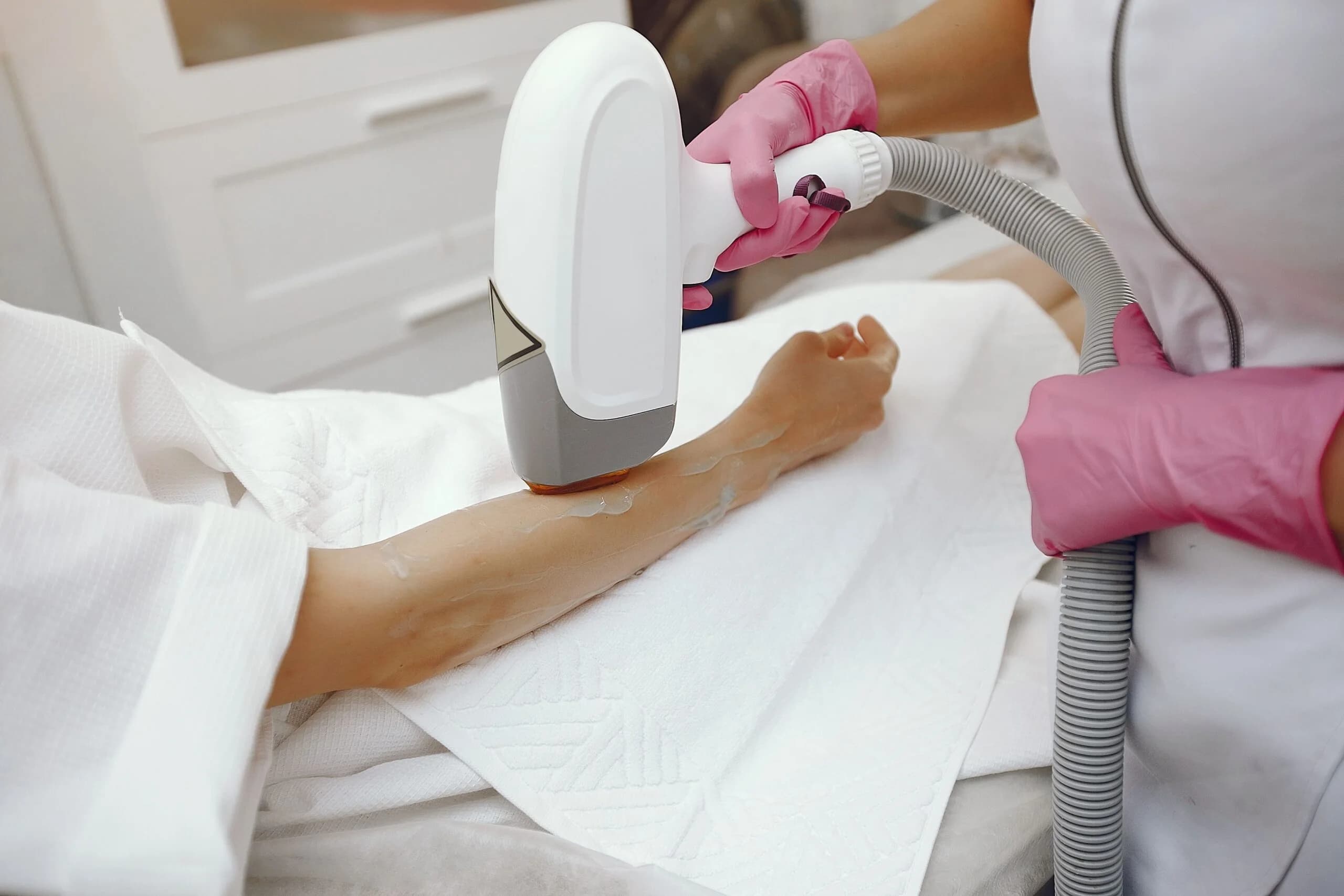
It ends the ingrown hair cycle
Shaving and waxing keep re-injuring the follicle. Reducing the hair is what actually stops the bumps and the darkening that comes with them.
What it is
Long-term hair reduction with integrated cooling, set to your hair and skin type rather than a fixed protocol.
The appointment
Skin type and hair assessment
Area shaved and cooled
Passes at the settings chosen for you
Soothing gel and timing for the next session
Right for you if
Afterwards
Mild warmth for a few hours. No hot showers, sauna or gym that day.
Your practitioner confirms suitability, strength and the number of sessions at your consultation. Prices are indicative.
Why it is worth it
Shaving and waxing keep re-injuring the follicle. Reducing the hair is what actually stops the bumps and the darkening that comes with them.
The contact head cools the skin as it fires, which is why most people book legs and underarms in the same visit rather than spreading them out.
Hair thickness, hair colour and skin tone all change the setting. A clinic running one setting for everyone is either underdosing you or risking a burn.
Choosing a practitioner
A patch test is not optional and a clinic that skips it is cutting the wrong corner. Ask what happens if you react, and who you ring.
Asked about laser hair removal
Only hair in its growth phase responds, and at any moment that is a fraction of what you have. Six to eight sessions spaced four to six weeks apart catches the rest as it cycles through.
Autumn. You need to stay out of strong sun between sessions, so starting in March means finishing before summer.
Yes, the morning of. Do not wax or pluck for four weeks before, because the laser needs the root still in place.
Poorly. The laser targets pigment, so pale and grey hair responds much less. Your practitioner will be straight with you about this at the patch test.
A 45 minute mapping appointment reads your skin and sets the order of treatments. Nothing is booked until you agree to it.